| Sims Ranch |
| A brief history of Sims Ranch and Sims Township |
|
As Edwin W. Sims’ fortunes and family grew, he and Lottie started looking for a place to relax away from the stresses of the big city. He had loved Saginaw Bay as a young man living in Bay City, and by 1907 (after the anti-trust case against Standard Oil) he and Charlotte started to search for a place where he could “sail a boat and live in the woods.” He reportedly bought a boat in Bay City and sailed to Port Au Gres; further up the shore on the west side of Saginaw Bay; nearby where he went camping as a young man. he found the wide beach and deep woods he wanted. While Pt. Lookout was a well-established vacation spot with weekend steamers from Bay City, the majority of land to the west had been abandoned and was considered worthless being mostly swamp, swale, and sandy ridge.
|
 |
|
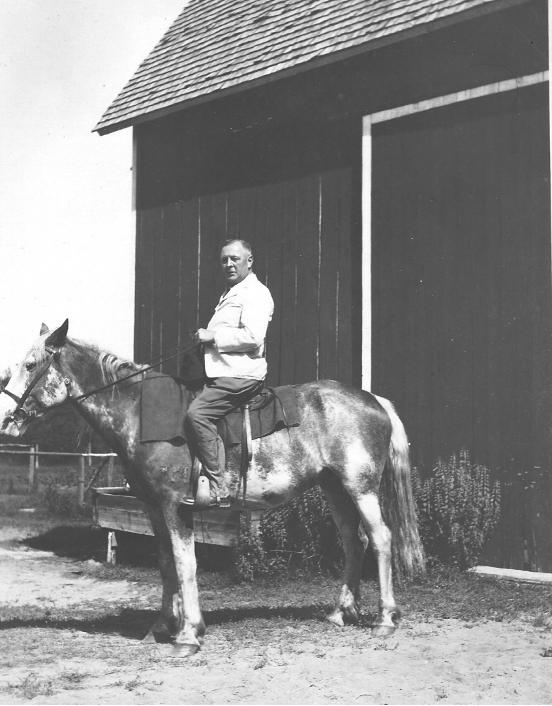
Edwin Walter Sims – at Sims Ranch – 1930’s |
 |
|
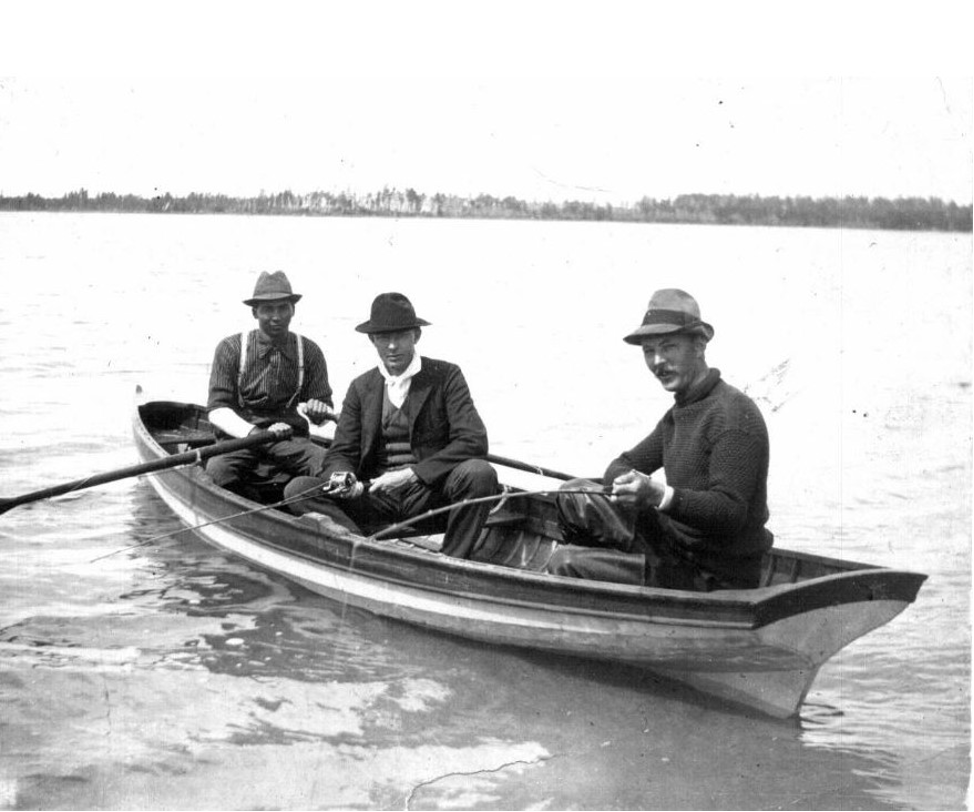
Edwin W Sims (left), as a young man, camping on Saginaw Bay. |
 |
|
E.W. Sims (in stern, right) enjoying time fishing in Michigan |
 |
|
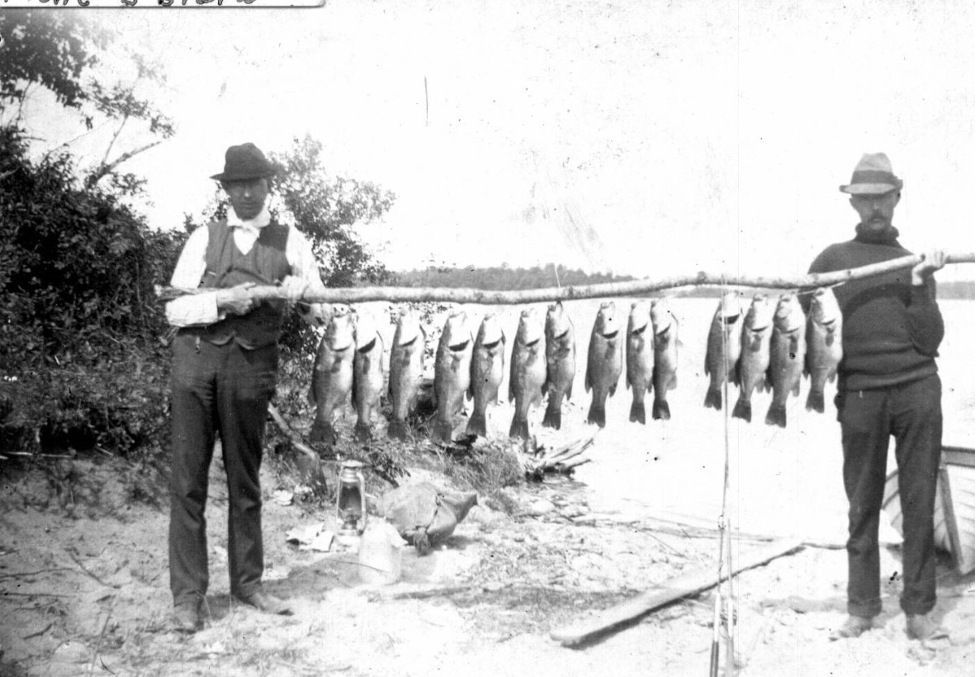
Catch of black bass at the ranch. (Edwin Sims right) |
| The first parcel, bought in 1907 under Lottie’s name, Charlotte Sims, was east of Pt. Lookout at a place now known as Whitestone Point. It was not until 1910 that the each front property, destined to become Sims Ranch, was bought.
|
 |
|
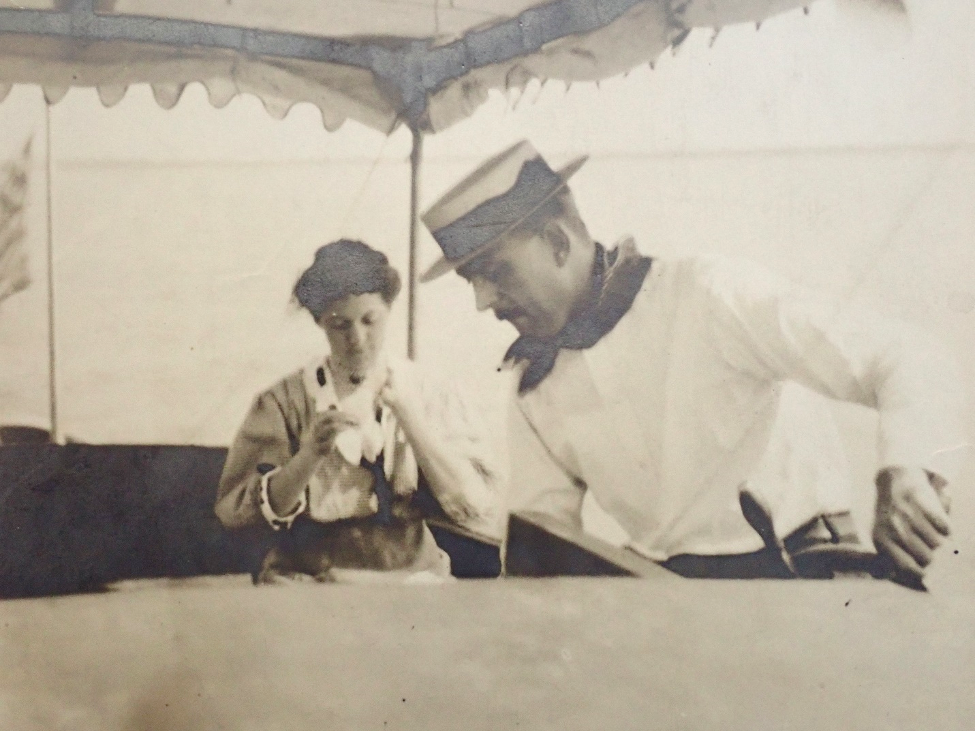
Charlotte Smith Sims and her husband Ed in “The Lottie” circa 1910 |
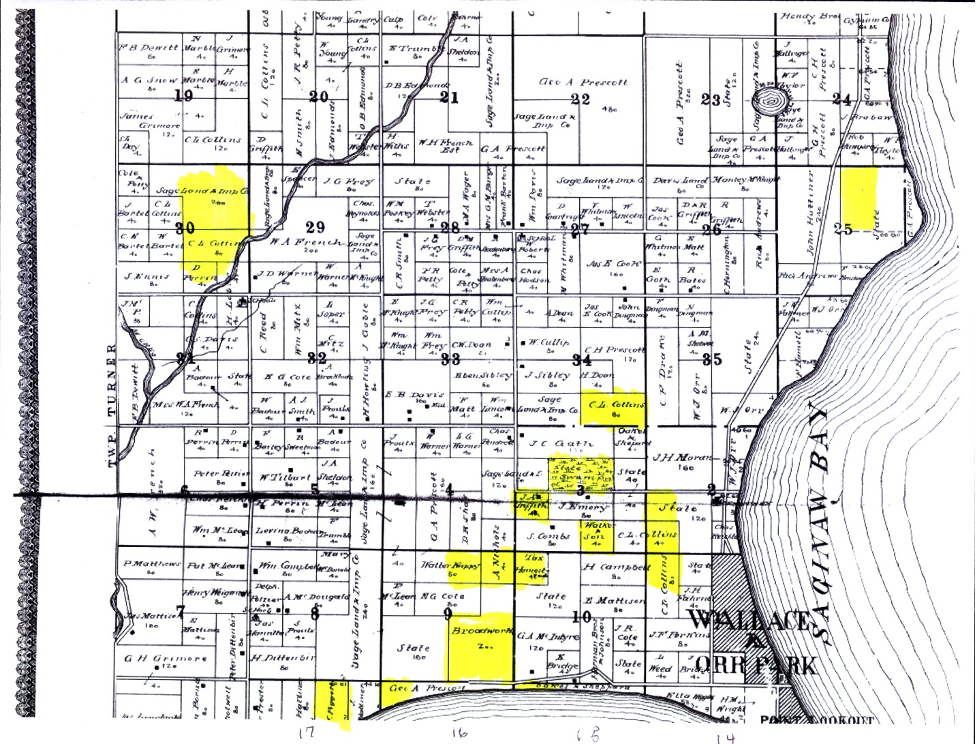
| Originally called Bay Meadow Ranch, it was not known as Sims Ranch until after 1917. By 1925, Sims Ranch consisted of all of sections 9, 10, 16 and 15 as well as most of sections 2, 3 and 4 in Sims Township. |
 |
|
Land bought in Arenac County 1907-1910 |
Land acquisition continued, with a hiatus from 1912-1920, from 1910 until WW I. Much of the land was obtained from the state in foreclosures for non-payment of taxes. His eventual holdings were in excess of 2500 acres, some say as much as 5-7000 acres, with 2 miles of shore frontage.
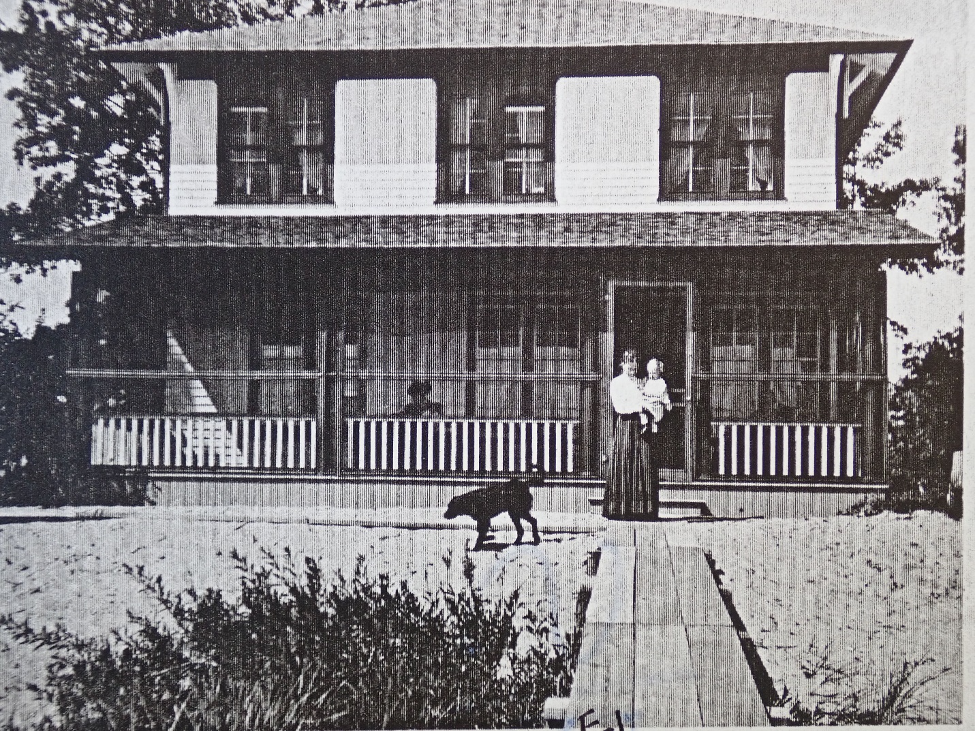
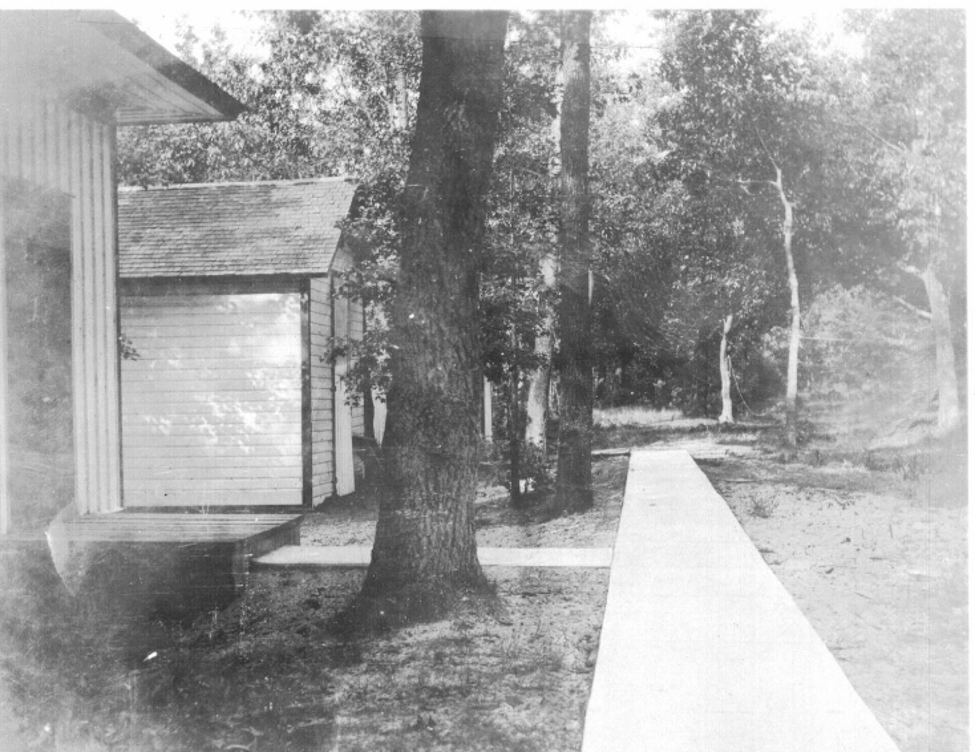
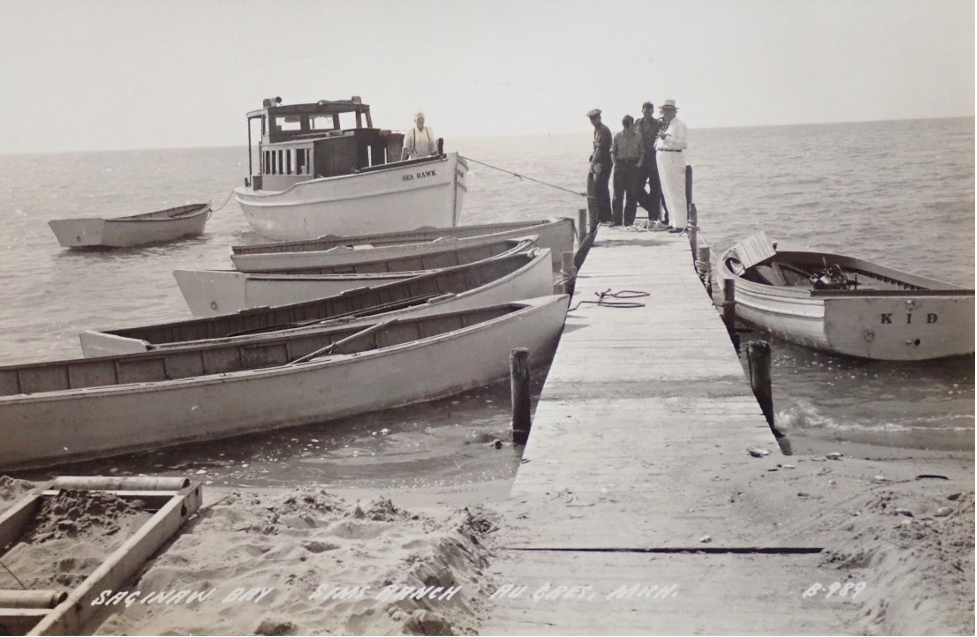
Newspaper articles state that, around 1910, a barge was brought in loaded with lumber and the original “Ranch House” measured only 24’ x 28’. Children slept in tents and later in additions to the original Ranch House. The complex continued to grow and eventually included a main house with multiple out buildings (ice house, laundry, out house – multi holed- and ice-house) Ice was cut from the lake every winter and stored in the ice house to provide cool foods all year round. Boat houses were built to store the multitude of boats, both large and small. |
 |
|
Original Ranch House built circa 1912 with Lottie Sims and daughter Priscilla in arms |
 |
|
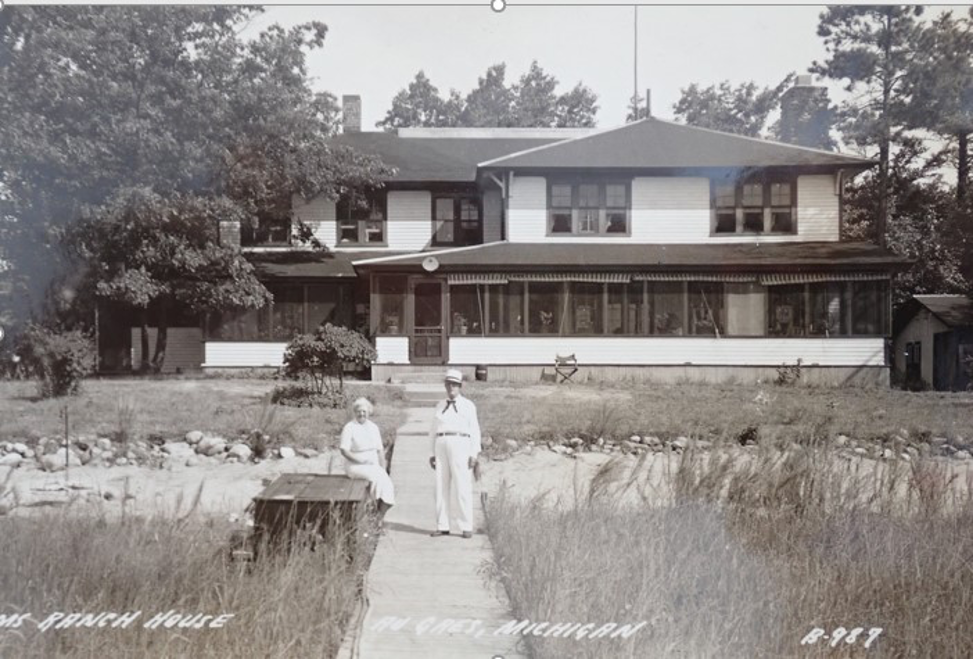
Expanded Sims Ranch House with E.W. Sims and wife Lottie circa 1940. Note the original cottage hidden behind and to Edwin's left of the addition. |
 |
|
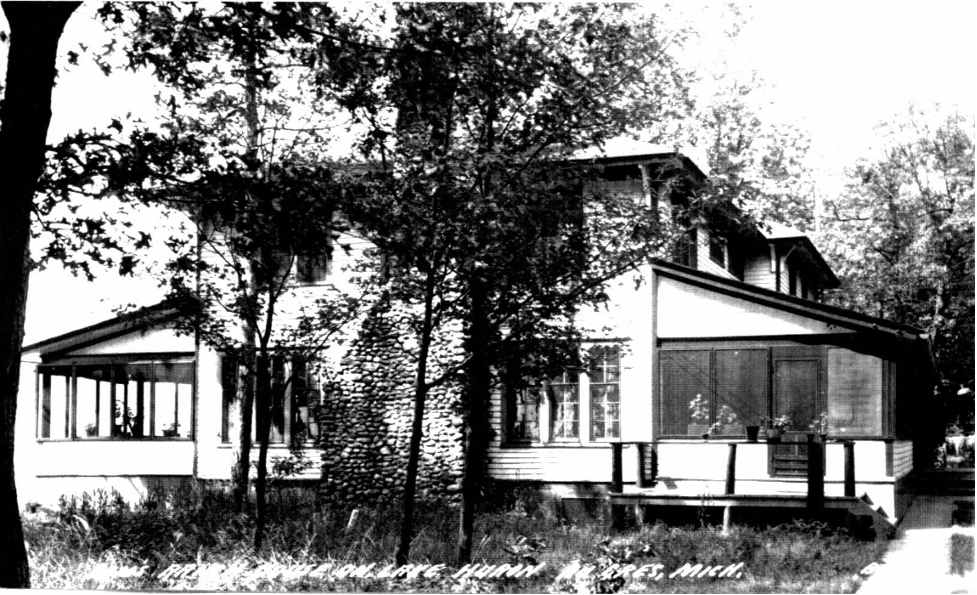
A photo of the Ranch House from the east showing spacious front and back porches |
 |
|
Out buildings at the Ranch House including a laundry, ice house, and the proverbial "out-house" |
 |
|
Boats tied up in front of the Ranch house circa 1940. Note the Sea Hawk at the back left – a favorite of Charlotte Smith Sims and often piloted by her brother-in-law Herb Sims. Edwin Sim is in white. |
 |
|
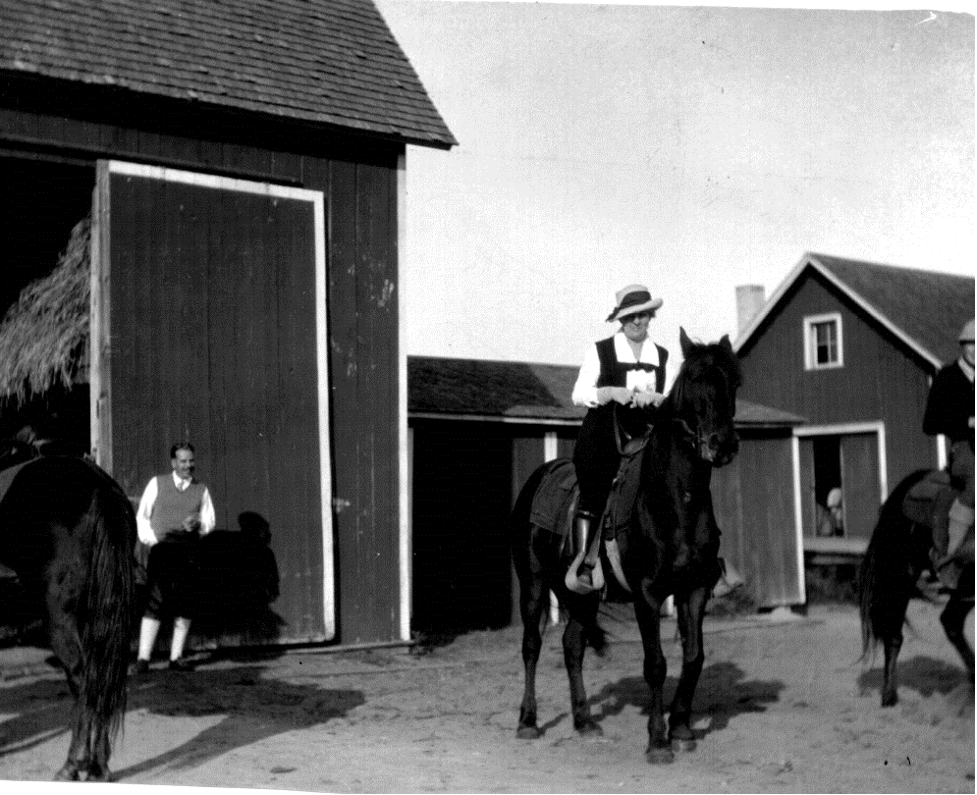
Sims Ranch Barn circa 1924. From Left: Edwin “Ned” Sims Jr., Grandmother (Charlotte “Lottie” Smith Sims) and Herb Sims |
|
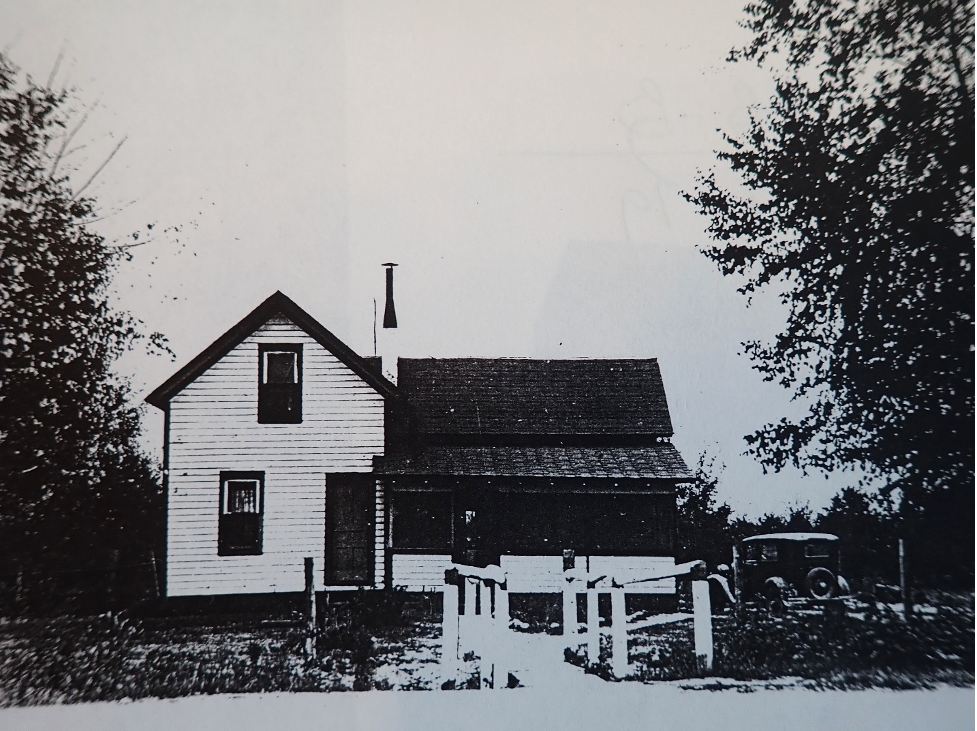
Sims bought horses from circuses, the Chicago police department, and other places that had well trained horse that could no longer fulfill their original “occupation” but were perfect for family outings. A house for year-round caretakers (Herb Lohr most notably) was built across from the horse barn on Michigan Ave. |
 |
|
Care taker house cosntructed on Sims Ranch |
Riding, sailing, fishing, and tennis were something in which the entire family participated. As Ed and Lottie’s family grew and married, all six of Sims children built individual homes arrayed along the shore east of the Ranch House and all came to spend the summers at Sims Ranch.
The Ranch house itself grew in size and stature throughout the years, as did the memories. Large porches, eight bedrooms, a Coke machine on the back porch, and the ever-present slot machine that took many a grandchild and great-grandchild’s allowance. Nancy McLaughlin Fork recalled witnessing a poker game being played in the Ranch House dining room in 1938, with the country still mired in the Great Depression. Ed Sims was playing a “friendly” with his sons and sons-in-law. Instead of playing with poker chips, they were playing with $100 bills! Even those who worked there had strong memories. |
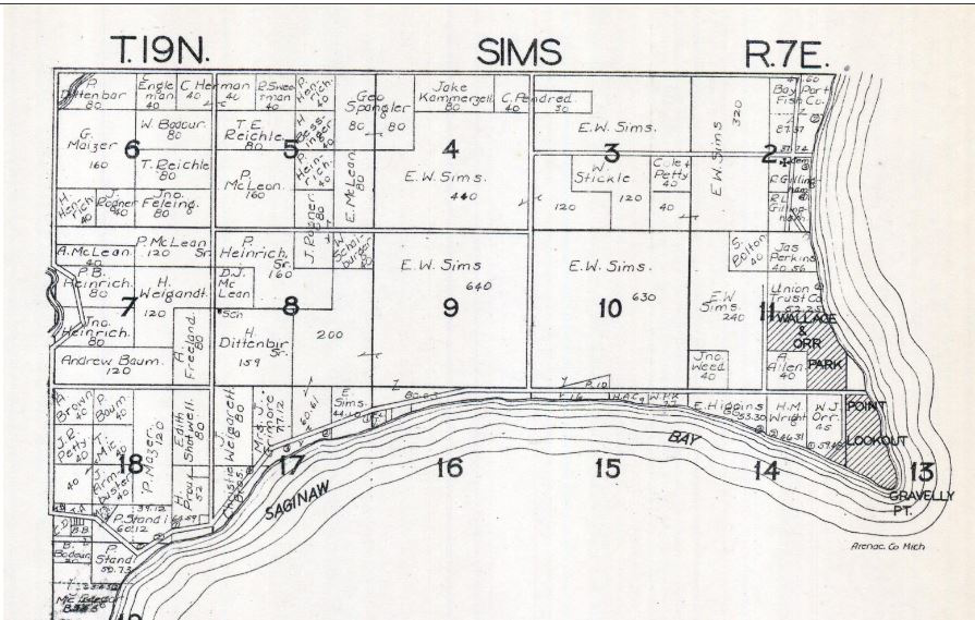 |
Plot map of Arenac county about 1925 showing land owned by E W Sims at that time. This does not include land owned on Pt Au Gres and other areas of Arenac County.
Map Source |
 |
|
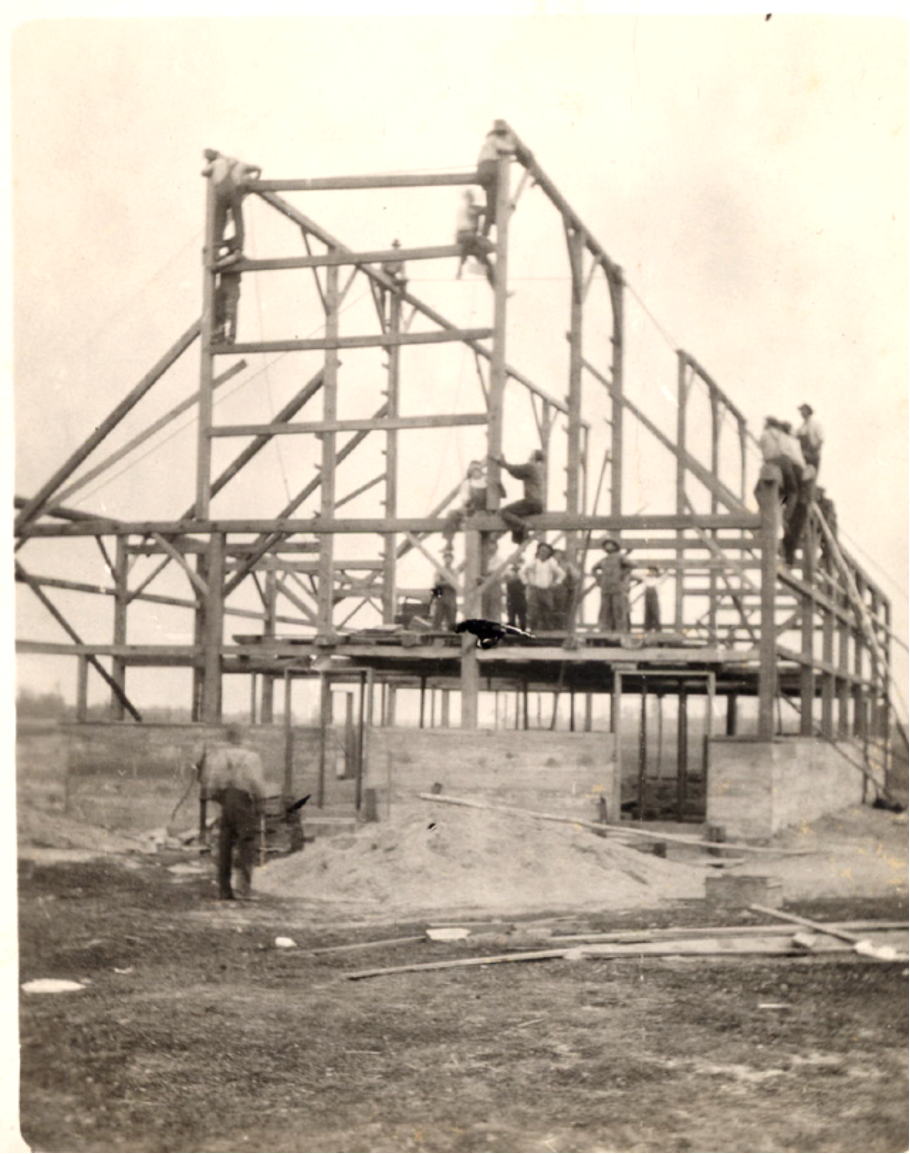
Raising the barn at the North End Farm circa 1922. The barn still exists on the farm at the Southeast corner of Delano and Bessinger Roads |
 |
|
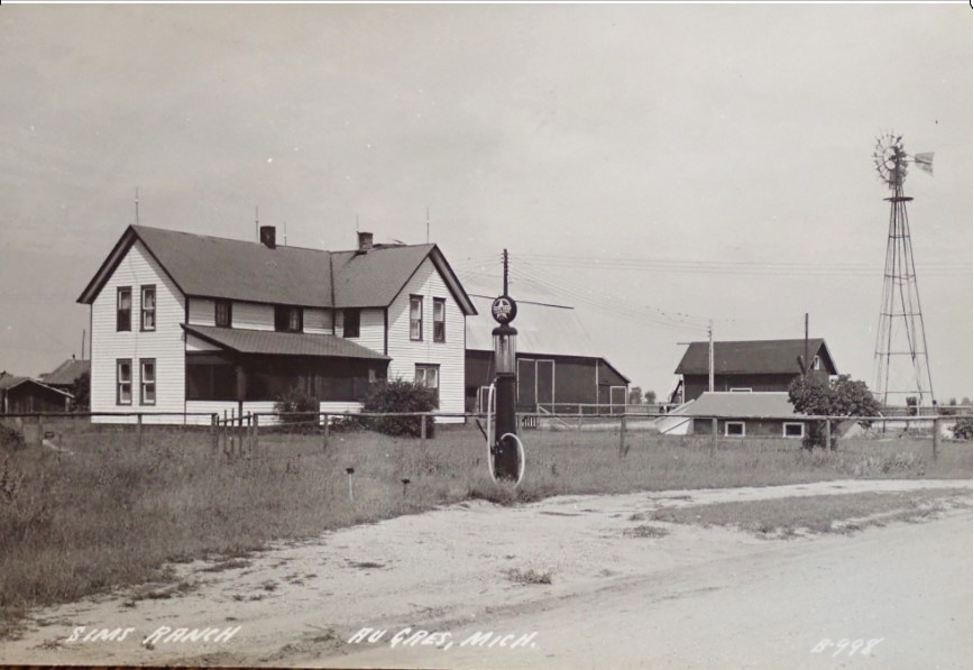
North End House and out buildings circa 1940 |
|
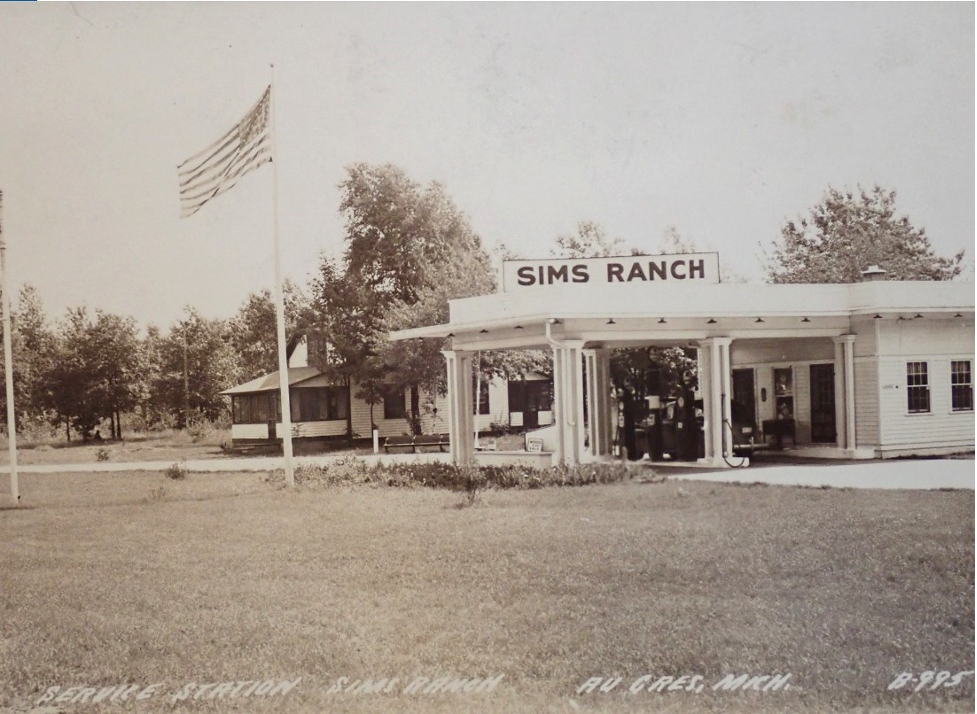
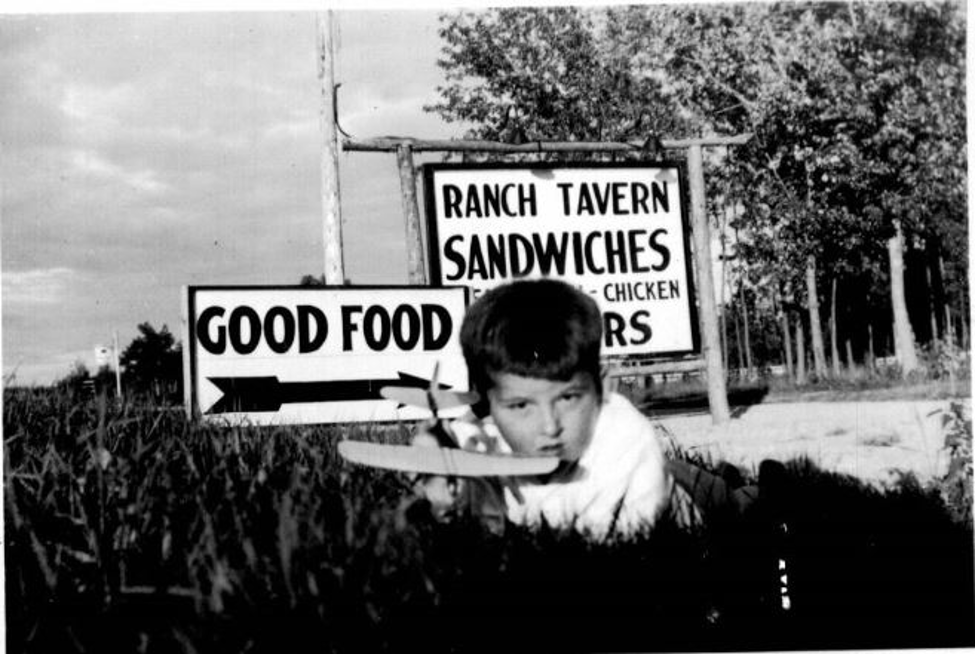
The parcels of land included two farms, one at the “North End” of the ranch (at the junction of Bessinger and Delano Roads) and another on Pt. Au Gres. These farms were tasked with providing fresh produce and meat for the many guests during the summer months and providing an abundance of food for the annual hunts. Often the stock was abundant and sale of lambs, bulls, dogs, and horses would be advertised in the Detroit Free Press. By 1950, the complex included a gas station and a restaurant/tavern (at the intersection of Foster Road and US 23 – known as Sims Ranch Corners). |
 |
|
Sims Ranch Service Station after construction of US 23 circa 1935 |
 |
|
Frank McNair Sims Playing in front of the Sims Ranch Tavern Circa 1936 |
|
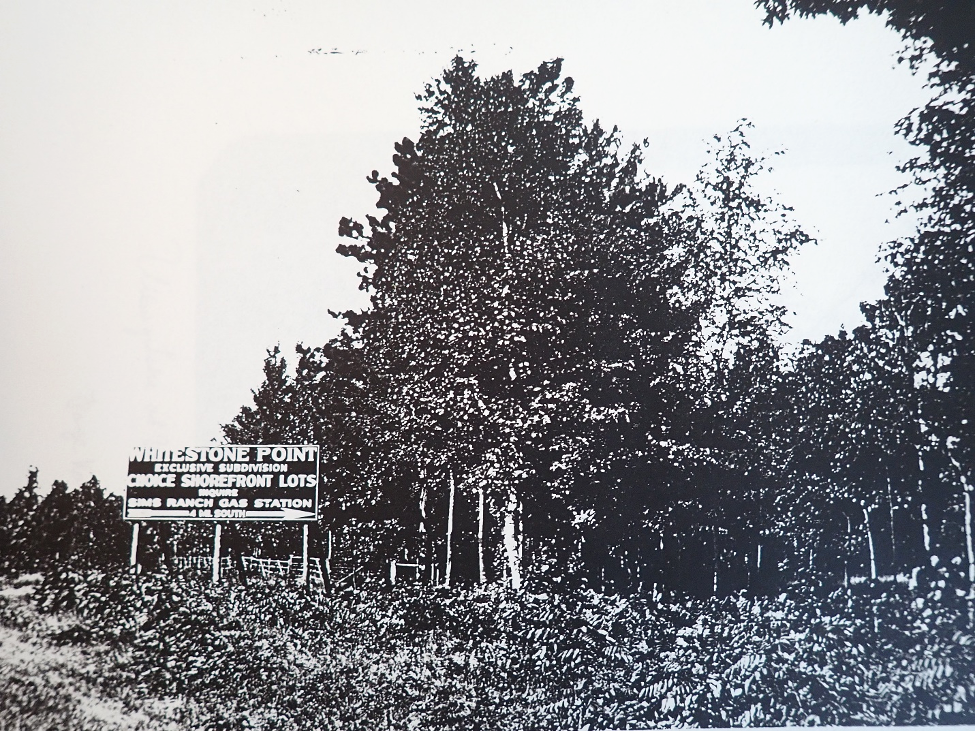
Herb Sims, the unofficial real estate agent for Sims Ranch property, maintained an office space in this location from which he would broker the sale of property E.W. no longer felt beneficial to the Ranch. |
 |
|
Large sign advertising the subdivision of White Stone Point – directing potential buyers to Herb Sims at the Sims Ranch Gas Station. |
As grandchildren came along, the boys were often put to work on the North End farm. One memory from Johnny Evans is: “Cutting, baling and storing hay for the North End and the horse barn down at the Ranch was a two-day event. All hands-on deck plus some neighbors. Lunch was served in the [Herb] Lohr’s house at a big round table. Mable [Lohr, Herb’s wife] and her daughters that were still around. Never had a better meal. Fresh bread, meat and gravy, potatoes, veggies, pies, gobs of butter, gallons of milk. Table covered with bowls and plates of food. It looked like something out of a Norman Rockwell painting. Craggy Herb Lohr, Gordon with a drifting eye and a cheek swollen from chewing tobacco, Mable the size of a house in a print dress, and others. The men all consumed huge amounts of food to fuel the afternoon work. Heads down and grace before anyone touched a morsel.
The Sims family hired many Mennonites from surrounding farms. The women did the cooking and helped with household chores, the men helped produce the food to feed family and visitors on Sims Ranch. Some of the workers were taken to work for the family in Chicago and John H Swaffield, an accountant in Standish, related the story (2019) that his mother, a young Mennonite girl, was offered a job with the Sims family in Chicago in the depth of the Great Depression, she stayed for 3 years and only left to come back to Michigan to get married. Eighty years later, this story is well remembered by her son
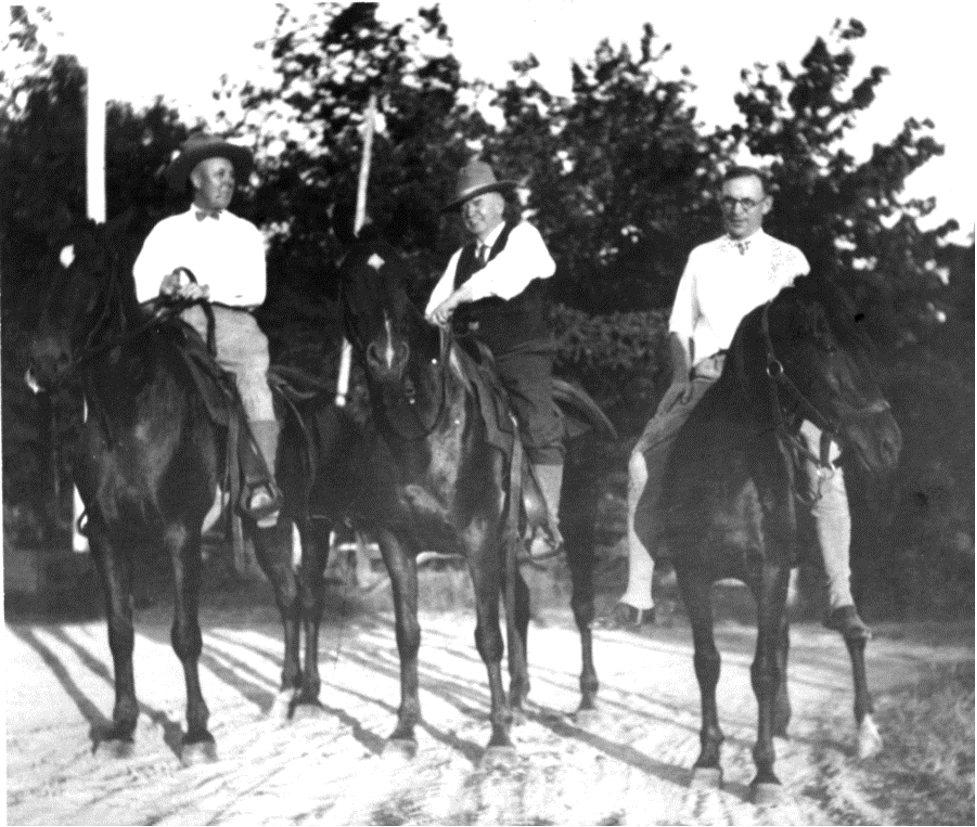
The location became so associated with the Sim’s family that, in 1917, many residents of the Whitney Township signed a petition to split off part of the large township into Sims Township. Sims Township in Arenac County still bears his name. As a part of his love for the area, E.W. Sims felt that it would be good for those who lived there as well as his pocket book, if the area was further developed. He would invite politicians for a week to the Ranch House, have his brother Herb take them fishing in hopes that they too would fall in love with the location. |
 |
|
From Left: Edwin W Sims, Fred Green, governor of Michigan during the Capone years, Col. A E Inglesh. Circa: 1927 |
|
This served well when, in 1929, after many visits by the Michigan Governor Fred W. Green (Republican 1926-1930) the route of US 23 was altered from its original commission for an inland route north of Bay City, to a shoreline route through Tawas and Alpena. |
 |
|
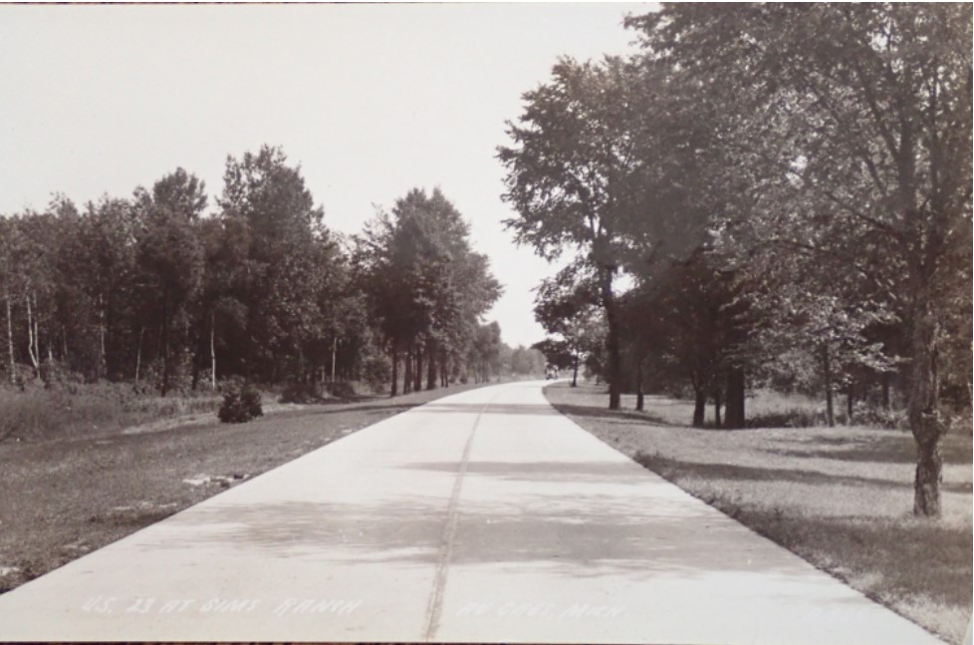
US 23 as it looked in 1932 after construction |
The construction of the first paved road through Sims Ranch in 1932 was a big draw for those summering at the Ranch; Nancy McLaughlin Fork remembered selling lemonade to the construction workers.
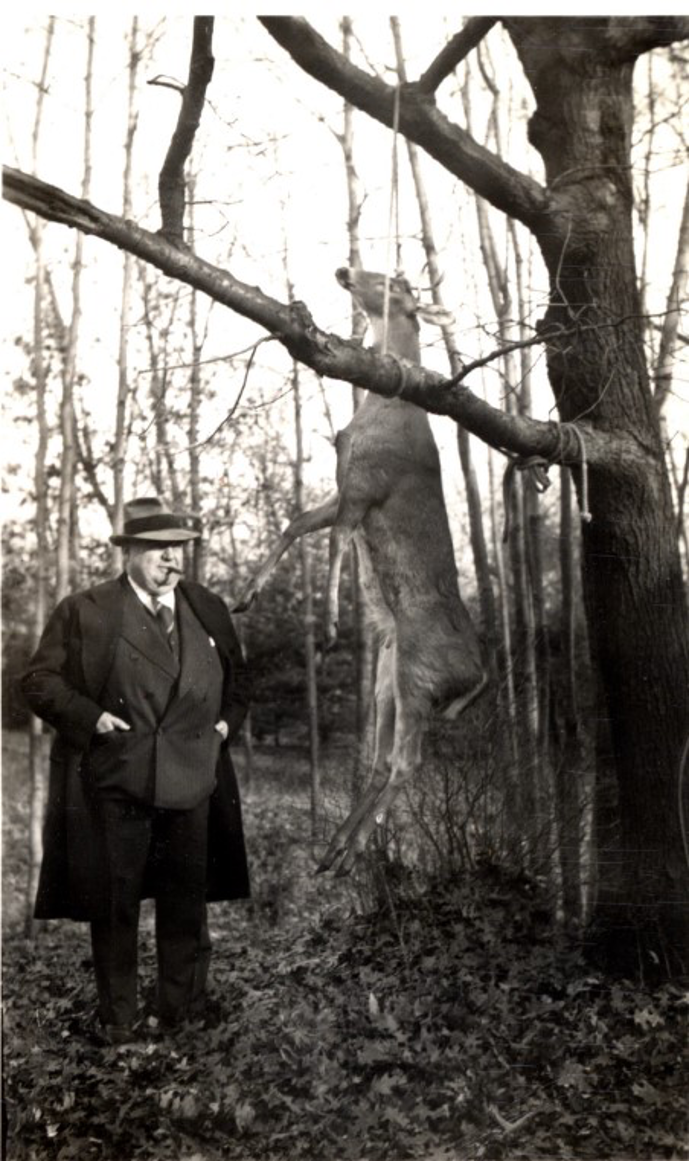
Society articles in the Chicago tribune extolled the virtues of Sims Ranch stating, “With its sandy beach, tennis courts, and miles of bridle paths, to say nothing of its “cuisine,” … would please any ranchers heart”. The young women who worked providing those meals remember what a production was made about the huge dinners provided, especially for the fall hunts where large platters of food were paraded around those sitting at the dinner table. Hunts were annual events and occurred in October (birds) and November (deer) of the year. |
 |
|
Ed’s son-in-law A G McLaughlin at a hunt circa 1940 |
|
The Ranch House was thrown open and throngs of guests, often representatives of the political and legal professions, famous singers, and entertainers on horseback created large shooting parties. |
 |
|
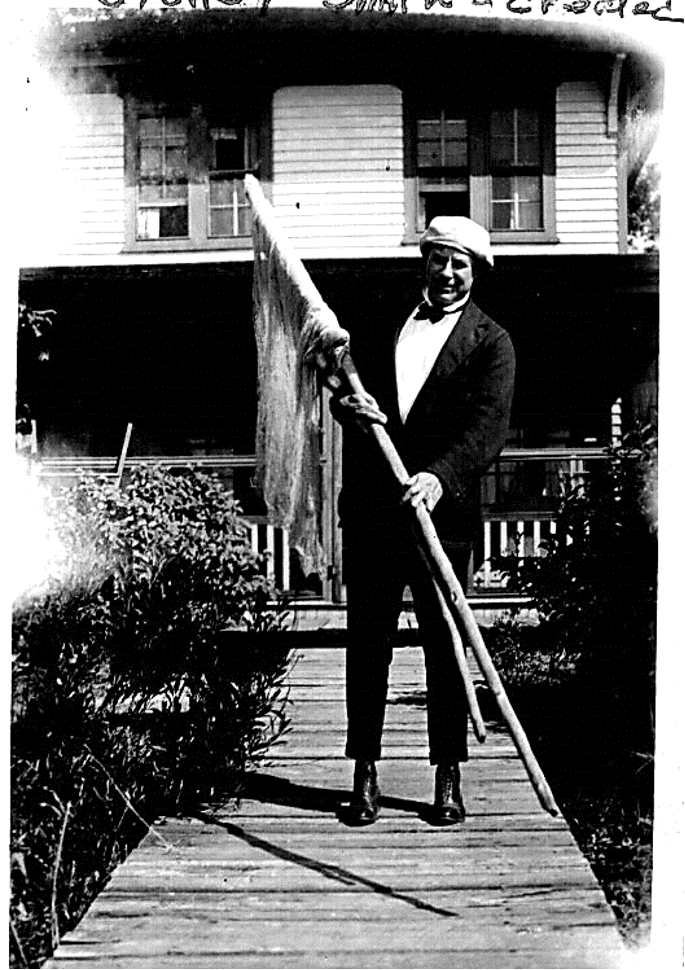
Sydney Smith, cartoonist who drew Andy Gump, bringing fish nets down to the boats in front of the Ranch House |
Walter Pendred, gamesman and foreman for the property, raised pheasants, partridge, and other deer to provide adequate entertainment. He was was instrumental in replenishing the population of white tailed deer decimated by lumberjacks in the 1800’s. Some hunts took place on property E.W. Sims owned near the western border of the Upper Peninsula of Michigan out near Iron Mountain. Kitchen staff were not happy having to travel hundreds of miles hauling food and provisions and much preferred working at the Ranch House. A careful record was kept of those invited to beach hunt, as well as the horses, guides and dogs involved; information made available to all those who came after.
The legend of Sims Ranch and Edwin Walter Sims continues to this day. Known for hospitality, wonderful food, and outdoor activity, a summer at Sims Ranch was something to write home about. |
 |
|
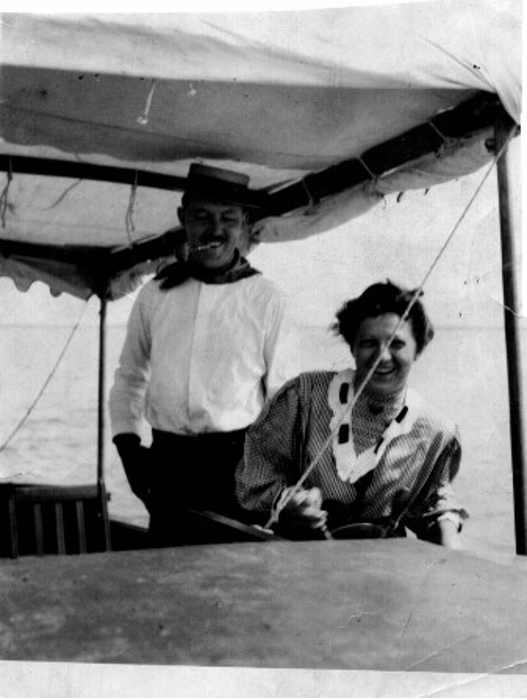
Edwin and Charlotte enjoying a summer day on the water off Sims Ranch |
 |
|
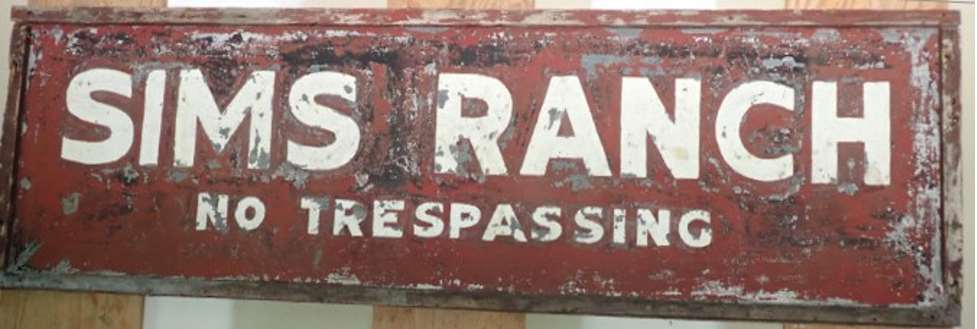
Early Sims Ranch Sign |
|
Chicago Tribune article on the growth and history of the Sims Ranch from 1949: |
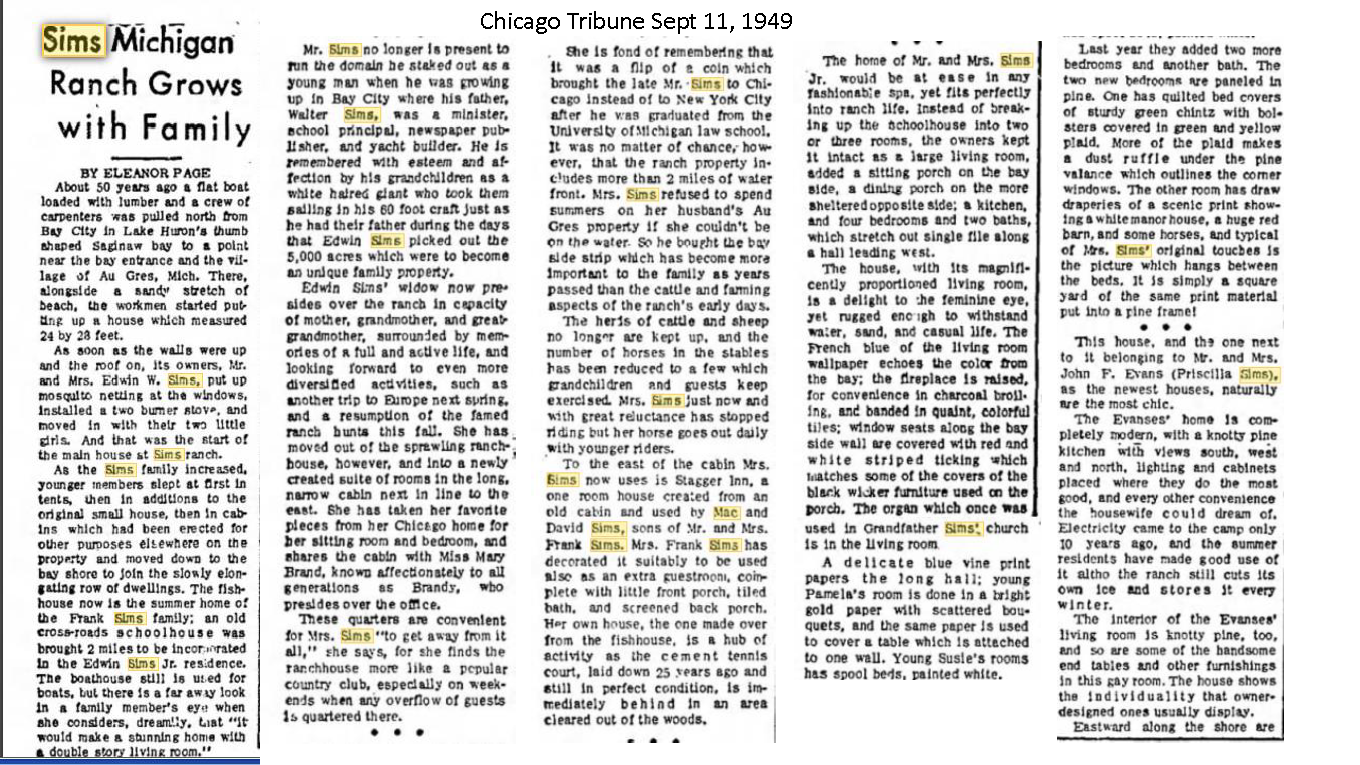 |
 |
Sources:
Ennes C. History of Arenac County 1973 – updated 2003
Chicago Tribune, Chicago. Sept 11, 1949 P 208
Detroit Free Press, Detroit, MI. Aug 5, 1931 p. 4
Detroit Free Press, Detroit, MI. July 31, 1946. P 20.
https://en.wikipedia.org/wiki/U.S._Route_23_in_Michigan#Early_history
Chicago Tribune, Chicago Aug 1, 1934 p 23 |
